KDE Artwork Guidelines

This handbook contains various guidelines that should be considered before creating artwork intended for use within the default KDE. (Most of these articles are excerpts from the wiki.kde.org.)

Official KDE Fonts

Taken from the KDE Corporate Identity Guidelines on wiki.kde.org.

"Typeface

The KDE project uses a typeface called "Bitstream Vera Sans Bold" for all printed and screen material.
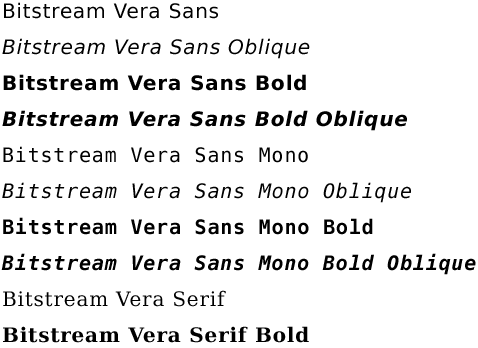
Bitstream Vera Sans Bold

As the Bitstream Vera family only provides support for the standard
TrueType character set (Latin1). To provide support for additional
languages the font has been extended by third parties. As the Bitstream
Vera font license doesn't allow modifications of the font using the
original font name the extended versions are available under new names:

Hunky Fonts (0.3): additional letters for Baltic, Central European,
South European and other languages, including Maori, Welsh and
Esperanto.
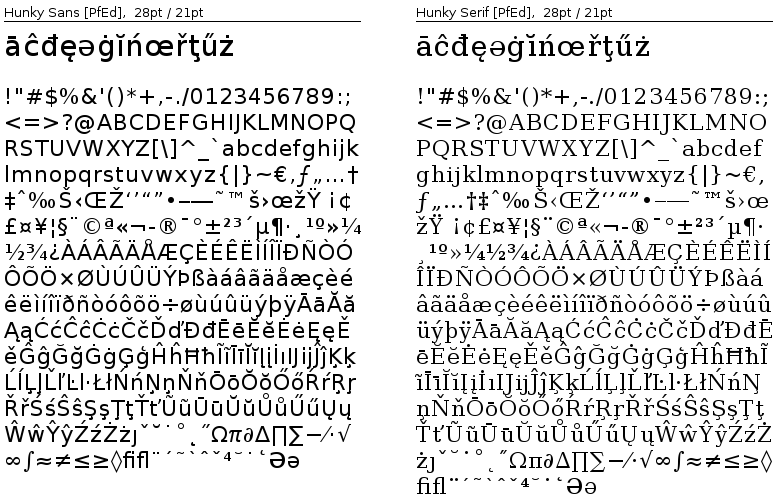
Hunky

SUSE/Novell offers "SUSE Sans" which is supposed to cover support for all Latin languages:


If Bitstream Vera Sans is not or might not be available then "Verdana" should be used (e.g. for Website styles).

Veranda
Headlines are in black or they are in white on blue or black
backgrounds. Sublines and lead-ins can be in black on white
backgrounds. Copy is always black


KDE Logo Font and KDE-EDU

In general the Kabel-Font may only be used uppercase. It may only be
used for the term "KDE" itself and related to topics like KDE-EDU, kids
and games.

A free look-alike called "Kabel Book" by A. Carr is available.
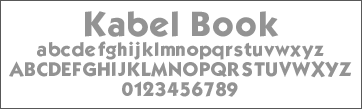
Kabel Book

In addition many Font Companies offer a Kabel font family commercially.

(2) Kabel is a trademark of Heidelberger Druckmaschinen AG, which may
be registered in certain jurisdictions, exclusively licensed through
Linotype Library GmbH, a wholly owned subsidiary of Heidelberger
Druckmaschinen AG.

(3) Gnome Foundation and Bitstream Inc. announce long-term agreement to bring high quality fonts to free software:

http://www.gnome.org/press/releases/bitstreamfonts.html

Font for aKademy

Silicon, Copyright 1991, Atech Software, Carlsbad CA

http://darklair101.www.50megs.com/fonts.zip

Official KDE Slogans

Taken from the KDE Corporate Identity Guidelines on wiki.kde.org.

KDE - Enjoy The Experience!

KDE - Conquer Your Desktop!

Proper use of the KDE logo.

Taken from the KDE Corporate Identity Guidelines on wiki.kde.org.


Detailed KDE Logo (Lineart)

KDE Logo Detailed SVG, KDE Logo Detailed PNG (3000x3000 Pixels)
screen design: to be used in large appearances (> 128x128 pixel), e.g. watermarks, patterns etc.

print design
: for use in corporate context in printed matters (letter
heads, business cards, etc.)

Simple KDE Logo (Lineart)

KDE Logo Simple SVG, KDE Logo Simple PNG (3000x3000 Pixels)

screen design
: to be used for small patterns.

print design
: for use in printed matters where the
KDE Logo measures less than 10x10 mm
{mosimage}

Crystal KDE Logo


KDE Logo Crystal SVG, KDE Logo Crystal PNG (3000x3000 Pixels)

screen design
: to be used for desktop artwork
(e.g.icons, splashscreens) and webdesign.

print design
: for use in home user context


Trademark License

Copying of the KDE Logo is subject to the LGPL copyright license. 
Trading and branding with the KDE Logo is subject to our trademark
licence:

1. The KDE logo can be used freely as long as it is not used to refer to products other than KDE itself.

2. There is no formal procedure for using the KDE logo as long as you stay within the above guideline for usage.

3. Whilst not required you should acknowledge the KDE e.V.s rights by
mentioning "KDE, K Desktop Environment and the KDE Logo are trademarks
of KDE e.V."

Proper use of the KDE name

Acceptable names:

K Desktop Environment -  This is our formal name; it is
especially used on all communications intended for external groups
which might not be familiar with KDE yet.

KDE - This is our informal name and abbreviation; it is our preferred casual name.

Do not use
different capitalization and hybrid forms, such as:
kde, K desktop environment, KDE Desktop Environment (used upper case
and stand-alone -- note that there are no restrictions for the (lower
case) descriptive usage of "the KDE desktop environment" in continous
text).

The names in this guide are the only ones that may be used for
publications and other materials, either in print or electronic form.

Splash Screen Guidelines

Splash Screens give us something nice and informative to look at while KDE is being loaded.

A splash screen should:

- use the Oxygen color palette.

- use icons from the default icon theme.

- must NOT use icons that are associated with a particular platform or distribution (e.g. a tux icon).

KSplash Handbook

KDE-Looks's Splash Screen section

Wallpaper Guidelines

A wallpaper should:

-be consistent in terms of style with the other desktop artwork.

-appear rather neutral in terms of taste. In other words a default wallpaper should be appropriate for both corporate and home use.

-use the current Oxygen color palette.

-not be distracting. This means that it shouldn't be too colorful and shades shouldn't change too rapidly. This is especially valid for the upper left area.

-be designed with the desktop icons and the kicker in mind. Ideally a default wallpaper should show just a single color on the upper 30%, the left 30% of the screen and the kicker area. The reason is that people place their icons in these places and having a single color without any other shapes and picture elements makes it easier to recognize them. Simplicity in these areas is very important.

(This article was orginially posted at wiki.kde.org)